
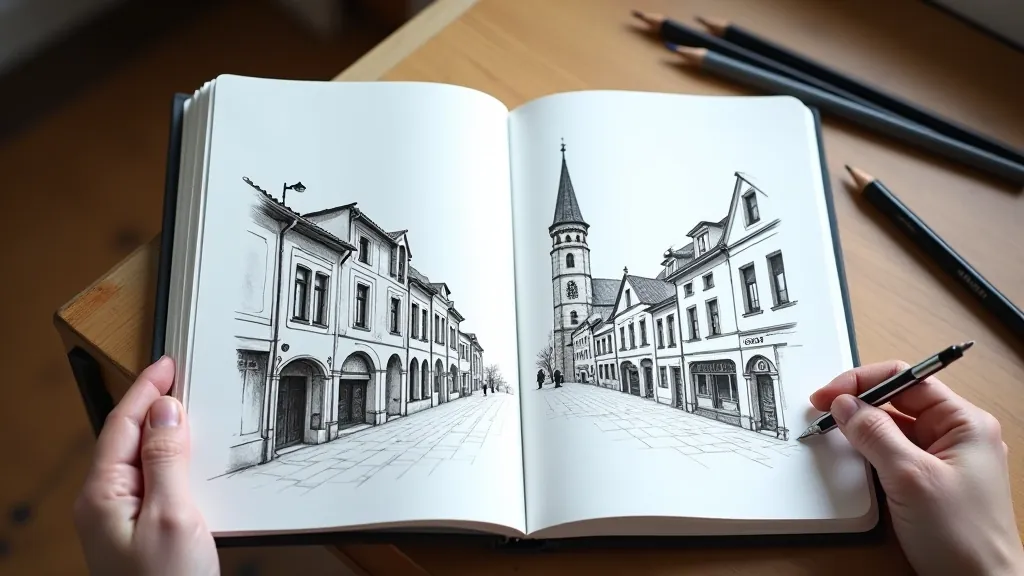
Beginner Sketching Techniques for Drawing
Master fundamental pencil sketching methods including shading, perspective, and composition basics to build your artistic foundation.
Read GuideMaster essential watercolor techniques for capturing the natural beauty of Lithuania's countryside, forests, and lakescapes. From wet-on-wet to layering approaches.
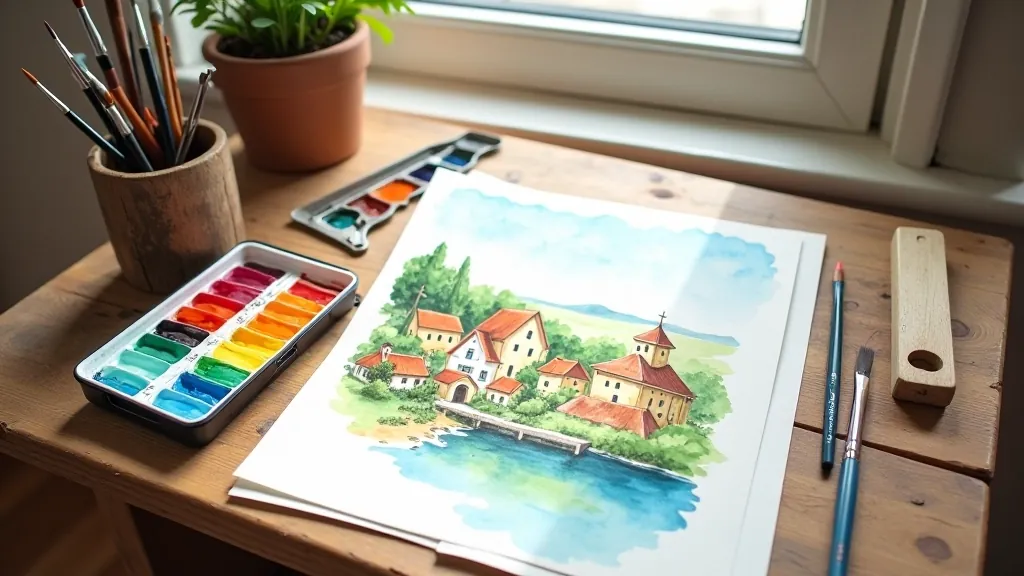
There's something magical about capturing Lithuania's natural world in watercolor. The medium lets you work with the landscape instead of against it. Transparency becomes your friend — it's how you build depth in forests and mirror reflections in lakes.
Whether you're painting the misty Curonian Spit, the rolling hills near Trakai, or autumn forests around Vilnius, watercolor gives you speed and flexibility. You'll notice changes happen fast, which keeps the process exciting.
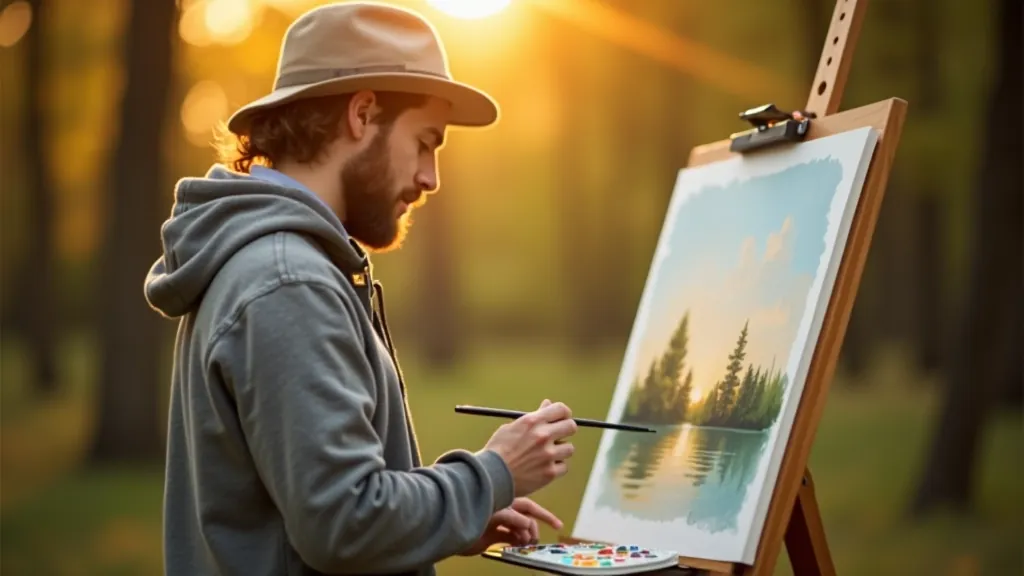
You'll want to master three main approaches when painting Lithuanian landscapes. Wet-on-wet creates soft, atmospheric skies — perfect for those moody Baltic clouds. Glazing layers builds complexity without muddying colors. And dry-brush work adds texture and detail to tree bark, stone, and weathered surfaces.
Most beginners start with wet-on-wet because it's forgiving. Water carries pigment where you need it. You're working with gravity and diffusion rather than fighting them. After 3-4 practice sessions, you'll develop intuition for how much water creates which effects.
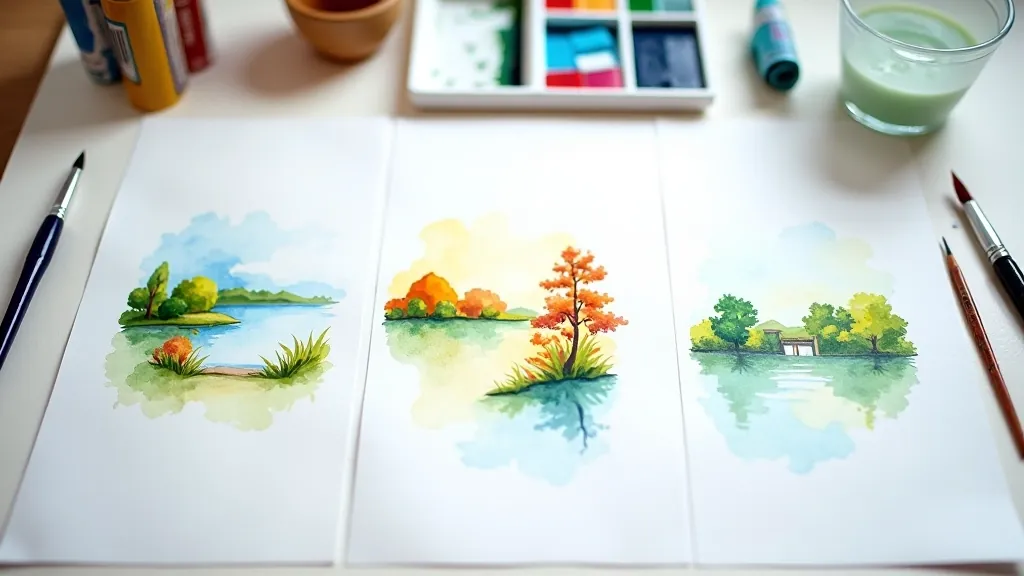
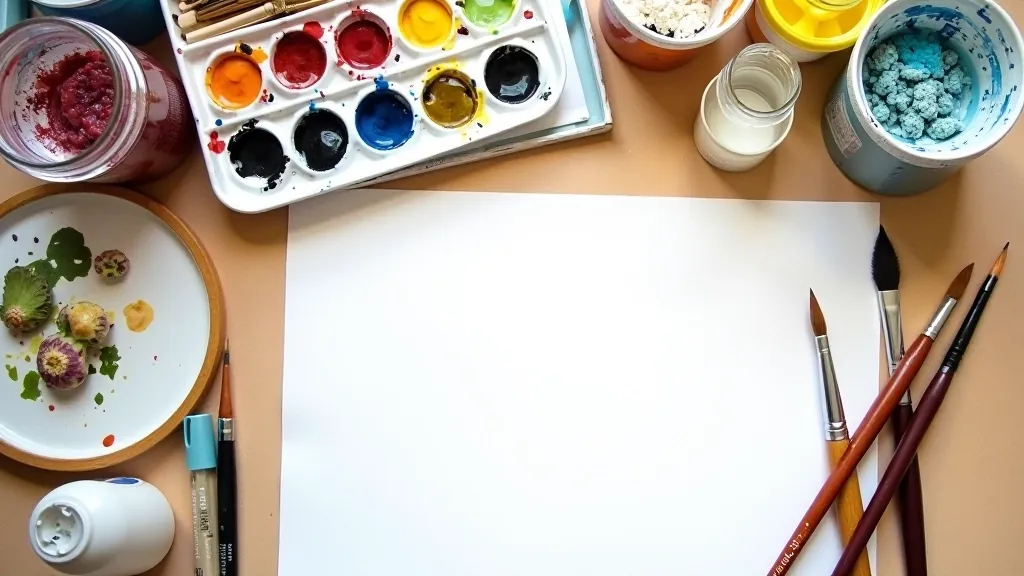
You don't need expensive gear to start. A basic setup includes student-grade paints, two good brushes, watercolor paper, and water containers. That's genuinely it.
For paints, focus on earth tones, blues, and greens — you'll mix most colors from these. A round brush (size 8) and a flat brush (1 inch) handle 90% of landscape work. Watercolor paper matters more than paint. Look for 140 gsm (75 lb) cold-pressed paper. It's textured enough to grab pigment but smooth enough for detail.
Quick tip: Two water containers — one for rinsing, one for clean water. Dirty water makes colors muddy. Change your rinse water frequently.
A mixing palette with wells works better than a flat surface. You'll want space to test colors before committing to paper. Paper towels or cotton rags absorb excess water and control flow. Start with what you have, upgrade after 20 paintings.
Here's the workflow that works for most landscape painters. You're not locked into it, but it prevents common mistakes.
Lightly sketch composition. Barely visible marks — watercolor doesn't erase pencil well. Focus on horizon line, major trees, water shapes.
Wet paper with clean water. Apply sky colors while paper's wet. Let them blend naturally. Don't overwork — the magic happens when you step back.
Once sky's dry, add trees and distant hills. These should be simpler than foreground — atmospheric perspective makes distance hazier.
Add texture, shadows, foreground detail. This is where dry-brush adds personality. More control, more definition.
Step back frequently. Add dark accents only where needed. Resist the urge to add detail everywhere — empty space is part of the design.
Most painters spend 45 minutes to 2 hours on a landscape study. The time varies based on paper size and complexity. Don't rush. Better to work slowly and notice what's happening than finish fast and wonder what went wrong.
Master fundamental pencil sketching methods including shading, perspective, and composition basics to build your artistic foundation.
Read Guide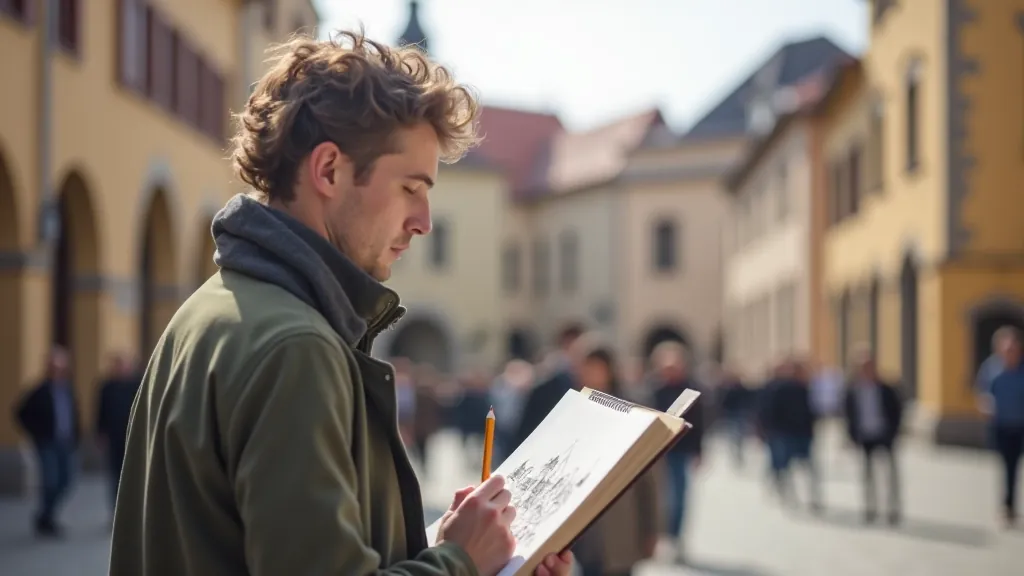
Discover how to capture architectural details and street life in one of Europe's most picturesque historic districts.
Read Guide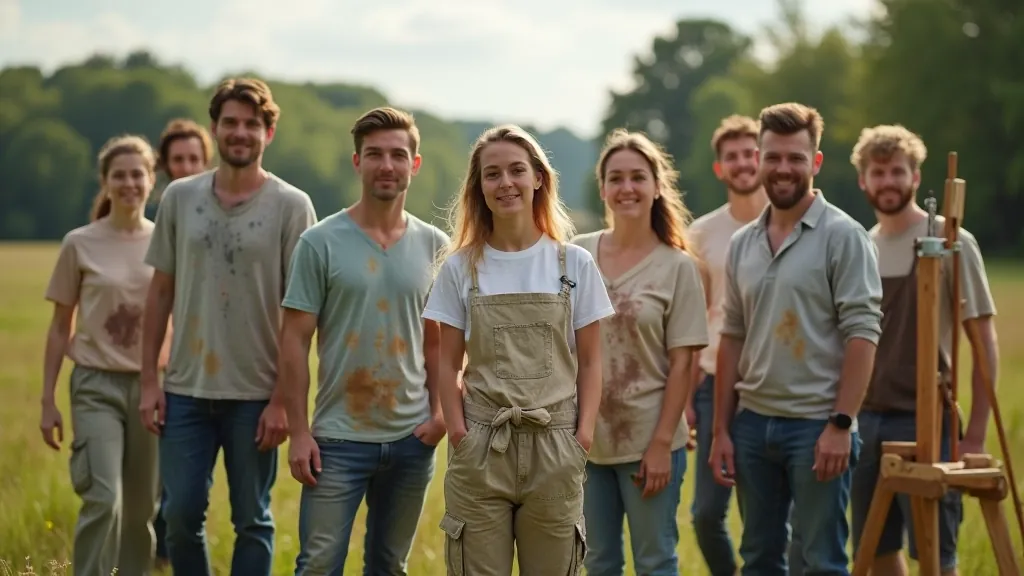
Connect with fellow artists in Nida, Trakai, and beyond. Information on local art groups and outdoor painting sessions.
Read Guide
This guide is educational and informational. Watercolor painting techniques vary based on materials, climate, and individual preference. Results depend on practice and experimentation. Art is subjective — what works for one artist might need adjustment for another. Use this information as a starting point for your own creative exploration.
Watercolor isn't complicated. You'll make mistakes — everyone does. The beauty is that watercolor mistakes often become happy accidents. That unexpected color blend might be exactly what your painting needed.
Grab basic materials, find a quiet spot outdoors or by a window, and paint something you see. Even 15 minutes of practice builds muscle memory and confidence. After a dozen paintings, you'll recognize your own style emerging.
Lithuania's natural landscapes are waiting for your interpretation. The countryside around Trakai, the forests near Vilnius, the dramatic coastline of the Curonian Spit — they're all excellent subjects. Pick one location, return there seasonally, and watch how light changes across the year. That's where real learning happens.
Browse More Art Guides