
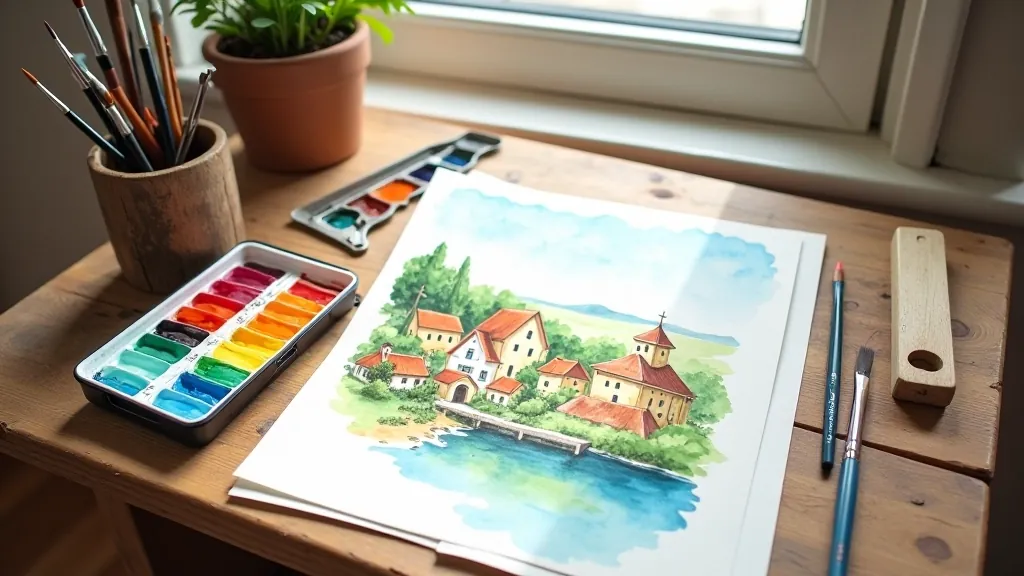
Watercolor Painting of Lithuanian Landscapes
Learn essential watercolor techniques for capturing the natural beauty of Lithuania's countryside and coastline.
Read GuideCapture the soul of Europe's most beautiful medieval streets. Learn how to sketch architecture, street life, and hidden details like a seasoned urban artist.
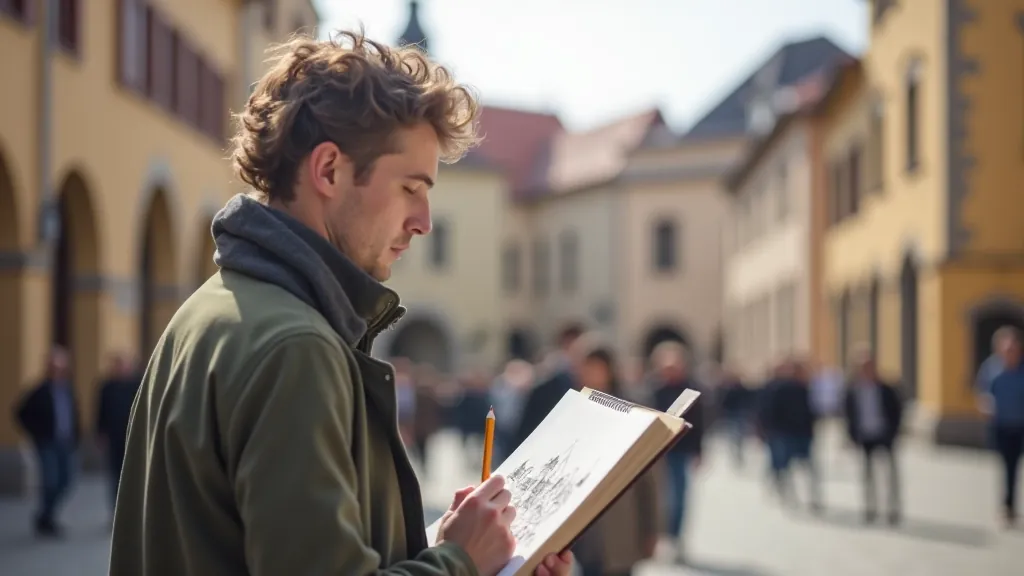
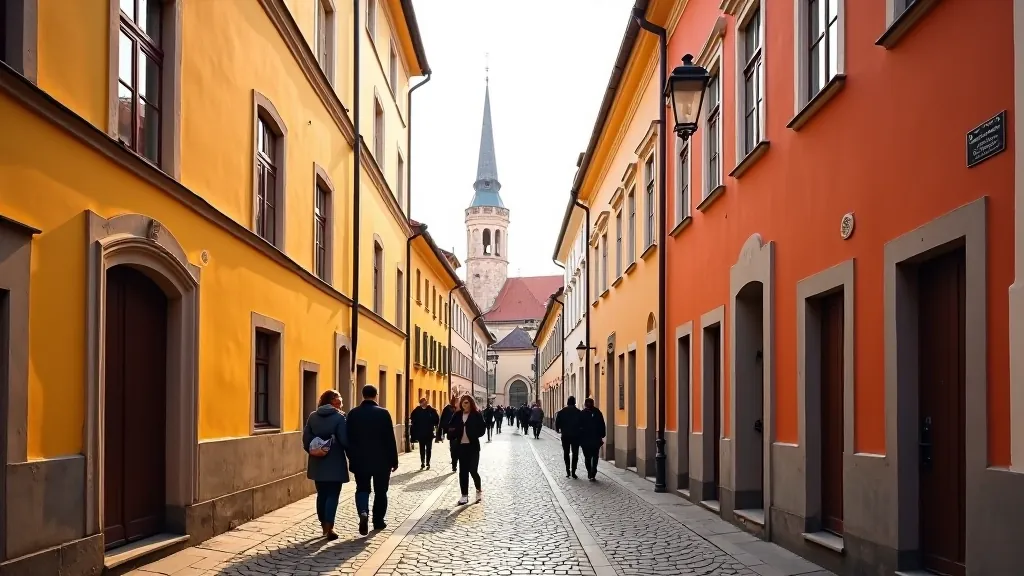
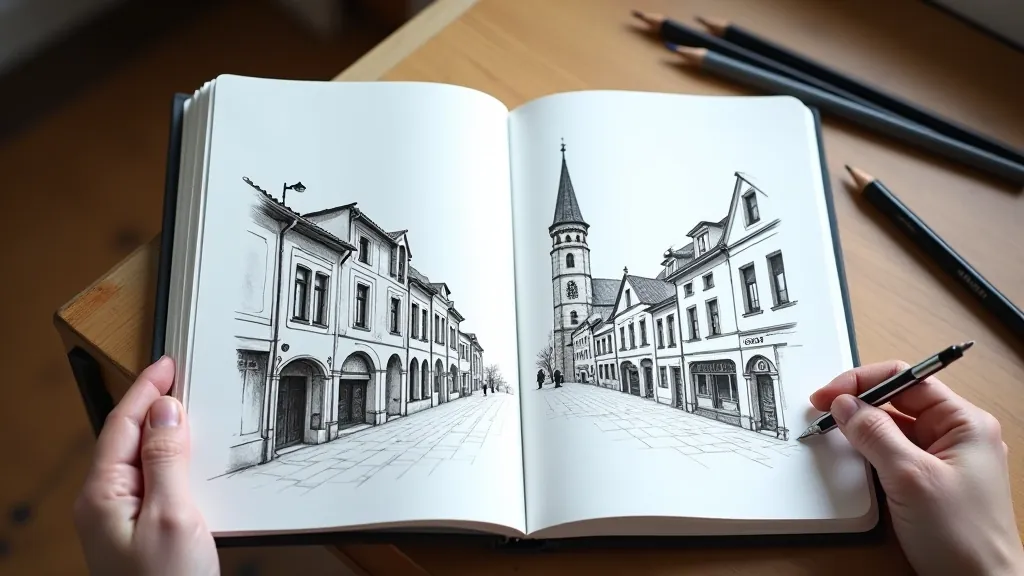
There's something magical about sketching in Vilnius. The Old Town isn't just photogenic — it's genuinely complex. You've got Renaissance facades, Gothic church spires, Soviet-era details tucked between medieval buildings, and cobblestone streets that lead to hidden courtyards. It's the kind of place where you'll discover new angles even after you've walked the same street five times.
The real appeal? The people. Street musicians play near Cathedral Square, locals sit at outdoor cafes, tourists pause at viewpoints. It's alive. That's what makes urban sketching here different from sketching static buildings — you're capturing movement, light, and human moments happening right in front of you.
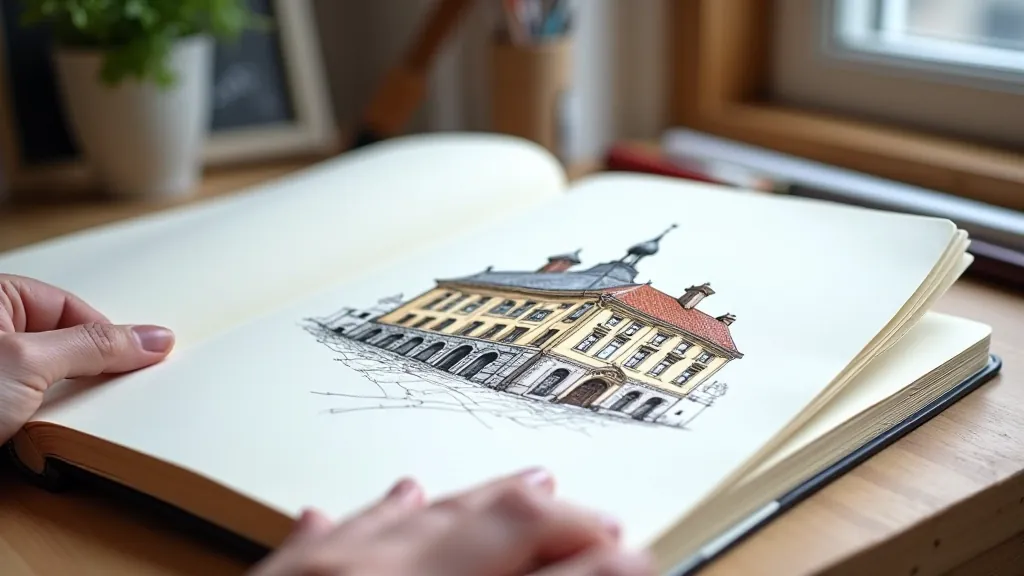
A5 or A4 size. Medium weight paper (150gsm minimum) so it handles ink without bleeding. Spiral binding works better than hardcover when you're standing and sketching against your leg.
0.3 and 0.5mm are your friends. Micron or Copic pens don't bleed through cheaper paper. Bring at least two of each — one runs out faster than you'd expect.
Optional but transforms your sketches. A small watercolor palette (12 colors) fits in your pocket. Let it dry between layers — patience matters more than speed here.
6-inch ruler helps with architectural perspective. Keep it compact. Many urban sketchers use a folded index card instead — works just as well, weighs nothing.
2H or HB pencils for light sketching before you ink. A small kneaded eraser is gentler on paper than rubber. Doesn't smudge ink if you're careful.
Canvas crossbody bag keeps your hands free. A small camp stool or folding seat is worth carrying — sketching standing up for 90 minutes gets tiring fast.
Don't start with details. Sketch the basic perspective lines of buildings first — vanishing points, roof angles, street direction. This takes 2-3 minutes and prevents the whole composition from going sideways. In Vilnius's narrow streets, getting perspective right is half the battle.
Block in light and shadow areas with your marker or watercolor wash before adding details. This creates instant depth. Cathedral shadows fall dramatically in afternoon light — use that. Sketches with strong value contrast read better even from a distance, and they're faster to complete.
You won't finish everything. Pick one area to render in detail — maybe a doorway, a shop window, or a corner building — and let the rest stay loose. This gives your sketch direction and keeps you from overwhelming yourself. Works especially well in busy areas where there's too much visual information.
People move. Instead of waiting for the perfect figure, do quick 10-second gesture sketches of poses you see. This trains your hand and gives your sketches life. A few quick figures in the street transform a static architectural drawing into a scene.
Open space, classic views, plenty of foot traffic to sketch. Arrive early to get a spot on the steps. The Cathedral itself is simpler to sketch than you'd think — straight lines, clear proportions. Street musicians and tourists give you constant moving subjects.
Narrower streets, artistic vibe, lots of character. Artists hang out here — you'll see other sketchers and won't feel self-conscious. Buildings are more chaotic (Soviet meets bohemian) which is actually great for loose, expressive sketching.
The main pedestrian street. Busy but manageable. Shop windows, cafes, mixed architecture from different centuries. You can duck into a cafe to finish your sketch if weather turns. Great for people-watching while you work.
Higher elevation, panoramic views. Sketch the tower itself or the view looking down over the Old Town. Less crowded than central squares. Good for when you want focused, uninterrupted time to work.
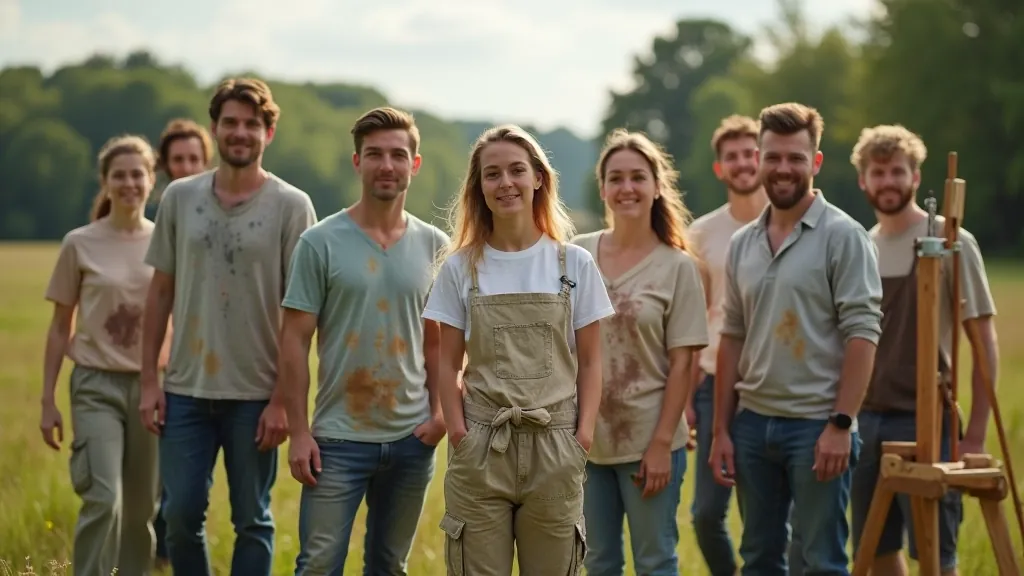
This guide is intended as educational information about urban sketching techniques and locations in Vilnius. While we've tried to be accurate, sketching styles vary widely between artists and what works for one person might not work for another. Always check current local regulations before sketching in public spaces, especially near government buildings or restricted areas. Have fun, be respectful of your surroundings, and remember that the best way to improve is through consistent practice and experimentation with your own approach.
You don't need years of experience to start urban sketching in Vilnius. You need a sketchbook, a couple of pens, and willingness to sit in public and draw. The Old Town welcomes sketchers — locals appreciate the interest in their city, and tourists often stop to chat about what you're creating.
Pick a location, give yourself two hours, and focus on one building or corner. Don't worry about it being "finished" or perfect. Urban sketches aren't meant to be precious museum pieces — they're practice, documentation, and proof that you showed up. That's where growth happens.
The architecture isn't going anywhere. Neither is the light, the people, or the magic of capturing a moment on paper. Get your supplies together, grab your sketchbook, and find a spot on those medieval streets. Your sketch is waiting.